


A capacitor is an electronic component that stores electrical energy temporarily in an electric field. It’s one of the fundamental building blocks of electronics, alongside resistors and inductors.
What is a capacitor?
In it’s most simple form, a capacitor is comprised of:
- Two conductive plates
- An insulating material between them called a dielectric
When you apply voltage, electrons accumulate on one plate and are removed from the other, creating an electric field between them.
What are capacitors used for?
The main use of capacitors it to store and release electrical energy in electronic circuits. Unlike batteries, which are designed to deliver energy over long periods, capacitors can charge and discharge very quickly. This makes them useful in situations where a burst of energy is needed in a short amount of time. You’ll commonly see them used in camera flashes, defibrillators, and some power backup systems. They rely on capacitors because they can rapidly provide stored electrical energy when it is most needed.
However, one of the most common uses of capacitors is stabilising and smooth the power received from power supplies. Electrical power coming from outlets or power converters often contains fluctuations or ripple. Capacitors help absorb these variations and release energy during small drops in voltage, creating a more reliable and cleaner electrical supply that can be critical for sensitive electronic devices. Computers, televisions, your mobile phone, and nearly all modern electronic devices use capacitors to maintain reliable operation and prevent unwanted electrical noise.
Capacitors are also widely used in filtering and signal processing applications. Because they respond differently to different frequencies, they can separate or filter electrical signals. In audio equipment, capacitors help divide bass and treble frequencies in speaker systems and remove unwanted noise from sound signals. In radio and communication systems, they are used for tuning circuits that select specific frequencies while rejecting others.
You’ll also find capacitors used in timing and control circuits. The use of capacitors in these circuits helps to charge and discharge at predictable rates, allowing engineers to create delays, oscillators, and repeating electronic signals. The same principle is used in flashing lights, electronic clocks, pulse generators and many digital circuits. Simple timing functions in household appliances, vehicle electronics and industrial equipment often depend on capacitors working together with resistors or microcontrollers.
Electric motors and power systems also rely heavily on capacitors. In many AC motors, such as those found in ceiling fans, refrigerators, and air conditioners, capacitors help start the motor and improve efficiency during operation. Large industrial electrical systems also use capacitors for power factor correction. The capacitors help improve the efficiency of electrical transmission and reduce wasted energy in power grids and factories.
The world we live in has developed to rely heavily on capacitors. They are inexpensive, reliable, and versatile. They appear in nearly every circuit board and electronic device, from tiny ceramic capacitors inside your mobile phone to large supercapacitors used in electric vehicles and renewable energy systems. Their ability to store energy, stabilise voltage, filter signals, and control timing makes them one of the most important components in electrical and electronic engineering.
What types of capacitors are there?
There are several types of capacitors, almost all of which you’ll be reliant upon in everyday life:
Ceramic capacitors
Small, cheap and very common, you’ll find ceramic capacitors used in microcontrollers, smartphones, computers and decoupling circuits (a small circuit technique used to keep electrical power in a circuit stable and free from noise).
Electrolytic capacitors
Because of their ability to handle large energy storage and smooth significant voltage fluctuations, electrolytic capacitors are commonly used in power supply filtering, voltage regulation circuits, and audio amplifiers.
Film capacitors
Film capacitors are commonly used in audio equipment, signal processing circuits, timing applications, and power electronics such as motor drives and inverters. Unlike electrolytic capacitors, film capacitors are generally non-polarised, so they can be connected in either direction without risk of damage. They also tend to maintain their capacitance value more consistently over time and with changes in temperature, which is important in circuits where accuracy matters.
Supercapacitors
Supercapacitors are a type of capacitor designed to store extremely large amounts of electrical energy compared to conventional capacitors. They don’t store as much energy as batteries in the long term, but they excel at delivering and absorbing energy very quickly. They’re commonly used in regenerative braking systems in electric vehicles and backup power supplies.
Tantalum capacitors
Similar to electrolytic capacitors, but using tantalum metal instead of aluminium, tantalum capacitors are also polarised and offer high capacitance in very small sizes, but with better stability and lower leakage current than standard electrolytic capacitors. However, they can be more sensitive to over-voltage and are often used in compact electronics like smartphones, laptops, and medical devices where reliability and size matter.
Mica capacitors
Mica capacitors use natural or synthetic mica as the dielectric. These are highly stable, extremely precise, and can handle high frequencies very well. This makes them ideal for radio-frequency (RF) circuits, oscillators, and precision timing applications. They are more expensive, so they tend to be used only where accuracy is critical rather than in general-purpose electronics.
Variable capacitors
Variable capacitors allow the capacitance to be adjusted mechanically by changing the distance or overlap between plates. These were historically very important in radio tuning circuits, allowing users to select different broadcast frequencies. While less common today due to digital tuning, they still appear in some RF equipment and specialist applications.
Polymer capacitors
Polymer capacitors are a modern variation of electrolytic and tantalum capacitors. They use a conductive polymer instead of a liquid electrolyte, giving them lower equivalent series resistance (ESR) and better performance at high frequencies. Polymer capacitors are widely used in high-performance computing, graphics cards, and power regulation circuits.
Capacitors summary
Capacitors have had a profound impact on the development of modern technology by enabling faster, smaller, and more efficient electronic systems. They make it possible for complex digital devices to operate reliably, support the global power infrastructure, and enhance advanced technologies in computing, communications, and clean energy.
Ashlea Components can supply many of the most popular capacitors available, along with a wide range of capacitors for specialist purposes.
A selection from our Capacitors range
-

006208000116001+
£0.00 -
008380020002010
£0.00 -

009155003201006
£4.16 -
009188004012062
£0.00 -
02011JR15ZBSTR
£0.00 -
02013A220JAT2A
£0.40 -
02013AR56CAT2A
£0.00 -
0201X104K6R3CT
£0.00 -
0201YC561KAT2A
£0.00
Featured Product from Capacitors
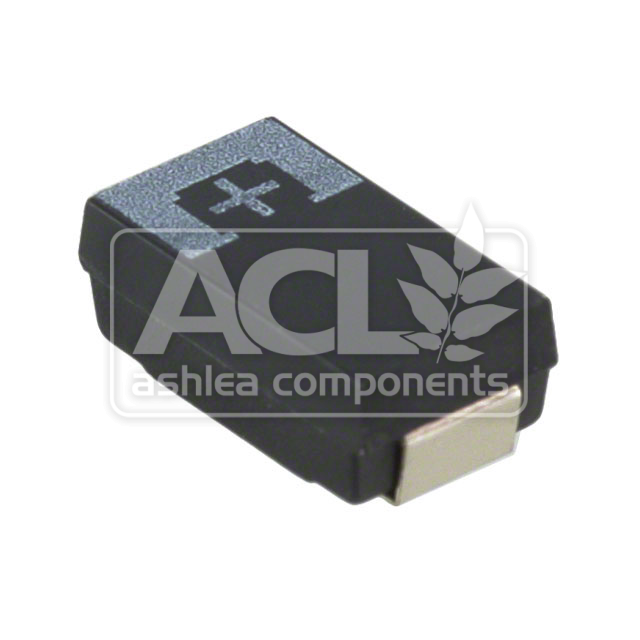
ETPF470M5H
Tantalum Capacitor, 470μF, 2.5V, ±20%, Solid Polymer, POSCAP TPF


