


An inductor is an electronic component that stores energy in a magnetic field when electric current flows through it. It is usually made from a coil of wire wound around a core made of air, iron, ferrite, or another magnetic material. Inductors are one of the three fundamental passive electronic components, alongside resistors and capacitors.
How does an inductor work?
The key property of an inductor is that it resists changes in current. When current through the coil changes, the inductor generates a magnetic field that opposes that change. Because of this, inductors smooth current flow and are especially important in power and signal-processing circuits.
The voltage-current relationship for an inductor is:
V=LdtdI
Where:
- V = voltage across the inductor
- L = inductance
- dtdI = rate of change of current
Inductance is measured in henries (H), though most practical inductors are in:
microhenries (µH)
millihenries (mH)
What does an inductor do?
We can broadly define what inductors do in 5 key areas:
1. Store Energy Magnetically
Unlike capacitors, which store energy electrically, inductors store energy in magnetic fields.
Stored energy:
E=21LI2
This makes inductors useful in switching power supplies and energy conversion systems.
2. Filter Electrical Noise
Inductors resist rapid current changes, so they help block high-frequency noise while allowing steady current to pass.
They are commonly used in:
- power supply filters
- EMI (Electromagnetic interference) suppression
- audio filtering
- radio circuits
3. Smooth Current Flow
In power electronics, inductors help create smooth and stable current output.
This is essential in:
- DC-DC converters
- voltage regulators
- motor drives
- battery charging systems
4. Create Magnetic Fields
Inductors are the basis of many electromagnetic devices.
Applications include:
- transformers
- relays
- solenoids
- electric motors
5. Tune Frequencies
When combined with capacitors, inductors form LC (where L represents the inductor and C represents the capacitor) resonant circuits that can select or generate specific frequencies.
Resonant frequency:
f=2πLC1
These circuits are used in:
- radios
- oscillators
- wireless communication systems
Types of inductors
There are many types of inductors, but they can broadly be classified in several different ways—by their core material, shape, operating frequency, adjustability, or application. However, most inductors fall into a handful of major categories commonly used in electronics.
Air-core inductors
Air-core inductors don’t use a magnetic core. The advantages of this are low losses are high frequencies and they’re good for RF circuits. The disadvantage is their low inductance.
Iron-core inductors
Iron-core inductors use iron to strengthen the magnetic field. This gives them high levels of inductance and makes them better for use in power applications. You’d typically see them used in power supplies, transformers and filters.
Ferrite-core inductors
These inductors use a ferrite core for high-frequency performance. Switching regulators, digital electronics and EMI filters are classic examples of where you’ll find ferrite-core inductors.
Toroidal inductors
Toroidal inductors are made from a ring-shaped core with wire wound around it. The offer efficient magnetic containment and low levels of electromagnetic interference. You’ll commonly find them used in power supplies, audio equipment and industrial electronics.
Inductors summary
Without inductors, efficient power supplies, radio systems, motors, and many forms of modern electronics would not function properly. Modern electronics rely heavily on inductors for:
- motor operation
- efficient power conversion
- filtering noise
- wireless communication
- electromagnetic control
Ashlea Components offer a significant range of inductors that you can explore below.
A selection of our Inductors
-

ELC08D331E
£0.42 -

ELC08D332E
£0.34 -
ELC08D392E
£0.42 -
ELC08D471E
£0.58 -
ELC09D221F
£0.00 -
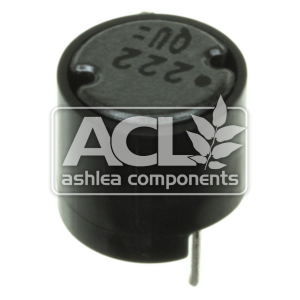
ELC09D271F
£0.43 -
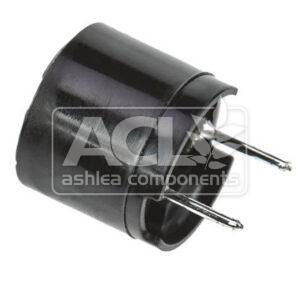
ELC09D331F
£0.57 -
ELC09D332F
£0.00 -
ELC09D8R2F
£0.00
Featured Inductor

MLG1005S2N0CT000
2nH Inductor, Unshielded, Multilayer, 900mA, 150mΩ, 0402 (1005 Metric)


