


A development board (sometimes referred to as a dev board) is a pre-built circuit board that contains a microcontroller or microprocessor along with the supporting components needed to use it right away. It is designed to help engineers, students, and hobbyists quickly test, program, and prototype electronic systems without needing to design a full custom circuit from scratch.
How do development boards work?
Development boards work through the combination of a main processing chip (usually a microcontroller or microprocessor) and the supporting hardware needed to make it run and communicate with anything the user wants it to. When a development board is given a power source (often through a USB connection or an external power supply), the onboard power regulation system provides stable voltages to the chip and other components so everything operates safely and reliably.
The heart of a development board is the processor, which runs instructions written in a program (often called firmware). The user writes this program on a computer, then uploads it to the board through a connection such as a USB. Once loaded, the program is stored in the board’s memory and runs as soon as the board is powered on or reset. From there, the processor repeatedly executes the code, reading inputs and controlling outputs.
The board interacts with the physical world through input/output pins (GPIOs) and built-in peripherals. For example, it can read signals from sensors (like temperature or motion sensors) and then respond by turning on LEDs, driving motors, or sending data over communication interfaces like UART, I²C, SPI, Wi-Fi, or Bluetooth. These built-in communication systems make it easy to connect multiple components together without complex wiring or extra hardware.
Many development boards also include helpful features like reset buttons, debugging tools, and bootloaders (small programs that help load new code). This makes it easy to test changes quickly and fix errors during development.
Types of development boards
Development boards come in several types, mainly based on the kind of processor they use and what they are designed to do. Each is suited to different applications, from simple sensor projects to full computer-like systems.
Microcontroller development boards
Microcontroller development boards are a major and popular type. They are designed around small, efficient chips that run a single program repeatedly. They are heavily used in embedded systems where real-time control is important. Examples include Arduino boards and many STM32 development boards. These are commonly used in robotics, sensors, automation, and basic electronics projects because they are simple, low-power, and easy to program.
Single-board computers
Single-board computers (SBCs) are much more powerful and run full operating systems like Linux. These boards behave more like small computers and can handle multitasking, networking, and complex software. A well-known example is the Raspberry Pi, which is used for everything from learning programming to building media servers, AI projects, and IoT gateways.
Wireless-focused development boards
There are also wireless-focused development boards, such as those based on the ESP8266 or ESP32 chips. These combine a microcontroller with built-in Wi-Fi and Bluetooth, making them ideal for Internet of Things (IoT) applications like smart home devices, remote sensors, and connected appliances.
FPGA development boards
FPGA development boards use reconfigurable hardware instead of fixed processors. They allow engineers to design custom digital circuits directly in hardware, making them useful for high-speed processing, signal processing, and specialised computing tasks where performance and flexibility are critical.
Special-purpose development kits
Special-purpose development kits are designed for specific industries or applications such as automotive systems, artificial intelligence acceleration, or industrial control. These often include extra sensors, communication interfaces, or certified hardware for real-world deployment testing.
Development boards summary
Development boards are important because they provide a fast, affordable, and practical way to design, test, and prototype electronic systems without needing to build complex hardware from scratch.
Our range of development boards helps customers in small, medium and large organisations, in addition to those at home, enjoy the benefits of these important electronic components .
A selection of our Development Boards
-

EMB043TFTDEV
£66.66 -

EVAL-ADG5401FEBZ
£45.54 -

EVAL-ADM2682EEBZ
£66.99 -

EVAL-ADM3053EBZ
£0.00 -

EZ430-RF2500-SEH
£0.00 -

EZR-LEDK2W-868
£74.99 -

KICKDEV01
£207.50 -
MIKROE-2454
£7.60 -
MM932LC
£17.00
Featured Development Board
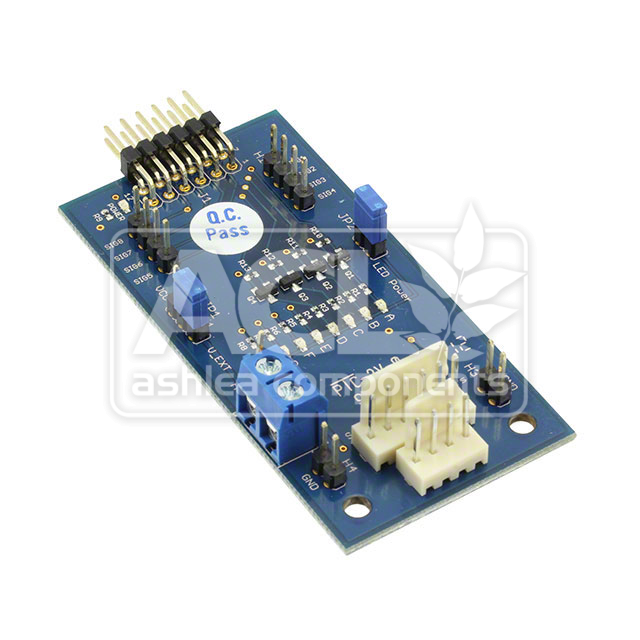
410-267
Development Kit PmodSTEP for use with Stepper Motor Driver


