


Circuit breakers and fuses are both protective devices used in electrical systems to prevent damage caused by excessive current, such as during overloads or short circuits. Their main job is to interrupt the flow of electricity when it becomes unsafe, protecting wiring, appliances, and preventing fires.
How do circuit breakers and fuses work?
Both devices work on the same principle: if current exceeds a safe limit, the circuit must be opened quickly to prevent damage. Fuses react very fast and are simple but single-use, while circuit breakers are more complex, reusable, and better suited for modern electrical distribution systems.
A fuse is the simpler of the two devices.
It contains a thin metal wire or strip that is designed to melt when too much current flows through it. When this happens, the circuit is permanently broken, stopping electricity flow. Once a fuse has “blown” it must be replaced.
Because of their simplicity and low cost, fuses are commonly used in plugs, small appliances, and electronic devices where a one-time protective response is sufficient.
A circuit breaker, on the other hand, is a reusable switching device. Instead of melting, it uses an electromagnetic or thermal mechanism to detect excessive current and automatically switch the circuit off. Once the fault is fixed, it can be reset manually (or automatically in some systems) to restore power. Circuit breakers are commonly found in household consumer units (fuse boxes), industrial systems, and large electrical installations because they are more convenient and can handle higher power levels.
Types of circuit breakers
Circuit breakers come in several types, designed for different voltages, currents, and applications—from household wiring to industrial power grids. They are generally classified by how they extinguish the electrical arc and what kind of protection they provide.
Miniature circuit breaker (MCB)
You probably have one of these in your home. MCBs are used in domestic consumer units to protect lighting and socket circuits from overloads and short circuits. They are compact, inexpensive, and automatically trip when current exceeds safe limits, making them ideal for everyday residential use.
Moulded case circuit breakers (MCCB)
In larger electrical systems, you’ll often find Moulded Case Circuit Breakers (MCCBs). These are used in commercial and industrial environments where higher currents are involved. MCCBs can handle much larger loads than MCBs and often allow adjustable trip settings, giving engineers more control over protection levels for different equipment.
Air circuit breakers (ACBs) and Vacuum circuit breakers (VCBs)
For high-voltage power transmission, utilities use Air Circuit Breakers (ACBs) and Vacuum Circuit Breakers (VCBs). ACBs use air to extinguish the arc formed when the circuit opens, while VCBs use a vacuum chamber, which is extremely effective at stopping arcs quickly. Vacuum breakers are especially common in medium-voltage distribution systems because they are reliable and require little maintenance.
Residual current circuit breakers (RCCBs) and Residual current devices (RCDs)
RCCDs and RCDs protect people rather than equipment. They detect small leakage currents (for example, electricity flowing through a person to ground) and disconnect the circuit very quickly to prevent electric shock. They are essential safety devices in modern homes.
SF6 (sulfur hexafluoride) circuit breakers
SF₆ (sulfur hexafluoride) circuit breakers use a special insulating gas to extinguish arcs efficiently at extremely high voltages. These are found in substations and large-scale power infrastructure.
Types of fuses
The differences between fuse types mainly come down to their size, response speed, voltage rating, and where they are used.
Cartridge fuses
One of the most common types is the cartridge fuse. You’re probably familiar with this a small cylindrical fuse enclosed in a glass or ceramic tube. These are widely used in household appliances and electronic equipment. Glass cartridge fuses allow you to visually see if the fuse has blown, while ceramic versions can handle higher currents and break more safely under fault conditions.
Blade fuses
Another very common type is the blade fuse, which is mostly used in vehicles. These plug directly into fuse boxes in cars and are designed for quick replacement. Blade fuses come in different current ratings and are colour-coded, making them easy to identify. They protect automotive wiring and electronics from short circuits and overloads.
High-voltage power fuses
High-voltage power fuses are used in industrial systems and electrical distribution networks. These are much larger and designed to safely interrupt very high currents and voltages. They often use special materials and construction to control the arc that forms when the fuse element melts.
Surface-mount fuses (SMD fuses)
In electronics, you may also find surface-mount (SMD) fuses, which are tiny components soldered directly onto circuit boards. These are used in modern compact devices like mobile phones, laptops, and other portable electronics where space is limited.
Resettable fuses and polyfuses (PTC fuses)
A special category is resettable fuses, also called polyfuses (PTC fuses). Unlike traditional fuses, they don’t permanently break the circuit. Instead, when too much current flows, they heat up and increase their resistance, limiting the current. Once the fault is removed and they cool down, they reset automatically. These are useful in low-voltage electronics where easy recovery is important.
Diodes summary
Circuit breakers and fuses are essential safety devices in electrical systems that protect circuits from damage caused by excessive current, such as overloads or short circuits. Together, they help prevent electrical fires, equipment damage, and dangerous failures in everything from household wiring to large industrial power systems.
We stock and supply a huge variety of circuit breakers and fuses.
Products in our Circuit Breakers & Fuses range


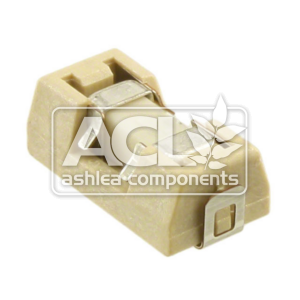
Circuit Breakers and Fuses Featured Product
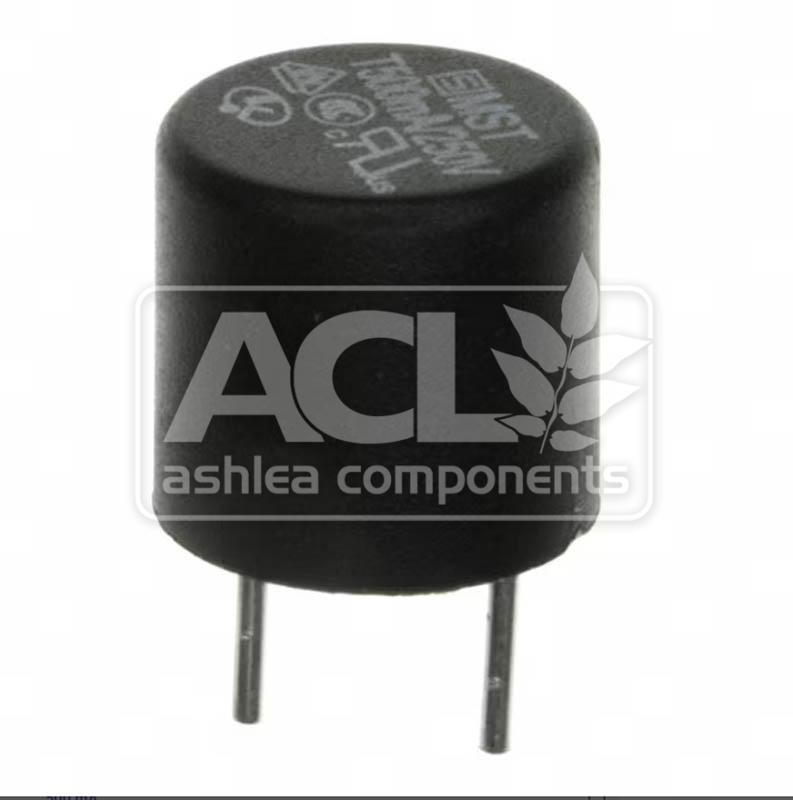
0034.6612
500mA 250VAC/125VDC Board Mount Fuse


